 CHINESE
 Call us: +86 18137127719
Focusing on agricultural and chemical products
Integrating research and development, production, sales, and technical services
|
|
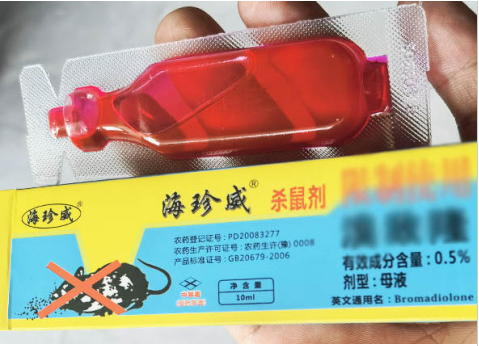
How to use rat poison correctly to avoid accidental ingestion?Time:2026-01-27 Mice poison is a common method for controlling rodent infestations. However, if used improperly, it can easily cause children, pets, or non-target animals to accidentally ingest it, leading to poisoning and even death. According to the World Health Organization, there are over 100,000 cases of poisoning worldwide each year due to accidental ingestion of rodenticides, with children accounting for as much as 40% of these cases. Therefore, it is crucial to use mice poison scientifically and establish a safety protection system. This article will analyze how to avoid the risk of accidental ingestion from four aspects: drug selection, placement norms, warning signs, and emergency handling. Traditional rat poisons (such as zinc phosphide, fluoroacetamide) are highly toxic and cause rapid death upon ingestion without any specific antidotes. They have been gradually phased out. Currently, the mainstream recommended rat control agents are anticoagulant types (such as bromadiolone, derricin), which work by interfering with the clotting function, leading to internal bleeding and death in rats. The process is slow (usually taking 3-5 days), providing valuable time for the victims to receive treatment. Moreover, anticoagulant agents are easily biodegradable in the environment and have lower toxicity to non-target organisms such as birds and fish, significantly enhancing their safety. Key principle: Avoid using "three-step backward" and "smell death" type highly toxic prohibited drugs. Choose products with clearly labeled "anticoagulant" and marked "child safety packaging" on the packaging.
II. Strictly regulate the placement location and method, and cut off the route of accidental ingestion The placement of rat poison should follow the principles of "concealed, fixed, and controllable": Placement location: Preferably place it along the paths of rat activities (such as corners, gaps in pipes, and debris piles), away from areas where children play (such as living rooms and bedrooms), pet activity areas, and food storage areas. Kitchen and dining areas are prohibited from being placed. Container fixation: Use dedicated poison stations (such as locked plastic or metal boxes), place the poison bait inside the container, and prevent spillage. If there is no poison station, the poison bait can be placed in a glass bottle or plastic bottle, with a 1-centimeter diameter small hole on the bottle body for rats to enter, while avoiding contact by other animals. Dosage control: Place the bait according to the recommended dosage in the instructions, avoid over-dosage causing the poison bait to spill. For example, in a home environment, 5-10 grams can be placed each time, and the remaining amount should be checked regularly, and un-eaten poison bait should be cleared in time. III. Set up multiple warning signs to enhance safety reminders The placement area should be marked with clear warning signs, including: Textual warnings: Post "Poisonous! Do not touch" in both Chinese and English near the poison bait station, with the font height not less than 5 centimeters. Color markings: Use bright colors such as red and yellow to mark the placement points, or hang warning flags. Physical isolation: Set up temporary barriers (such as using tape to define the boundary) around the placement area to prevent children from approaching. Home scenarios: If there are children or pets at home, it is recommended to place the poison bait station in a locked cabinet or at a high place during the placement period, and inform all family members of the location and danger of the poison bait. IV. Improve emergency response plans to reduce poisoning hazards Although precautions are taken, accidental ingestion incidents may still occur. Therefore, an emergency response plan needs to be formulated in advance: Spread of first aid knowledge: Family members should be aware of the symptoms of anticoagulant poisoning (such as nosebleeds, gum bleeding, and skin bruises) and the first aid measures (such as immediate emesis induction and retention of the medication packaging). Reserve antidotes: Vitamin K1 is a specific antidote for anticoagulant poisoning. A small amount can be prepared at home (stored according to the instructions), but it is more important to seek medical treatment promptly. Medical resource connection: Early contact with the emergency department of nearby hospitals and their ability to detoxify anticoagulants should be understood to ensure prompt treatment in case of accidental ingestion. Conclusion To use rat poison correctly, one must consider both "rat control efficiency" and "safety protection". By choosing low-toxicity agents, standardizing the application, strengthening warnings and improving emergency plans, the risk of accidental ingestion can be minimized to the greatest extent. Moreover, advocating the "comprehensive rat prevention" concept (such as sealing mouse holes and maintaining a clean environment) and reducing reliance on chemical agents are the fundamental ways to solve the rat problem in the long term. Safety is no trivial matter; every cautious operation is a respect and protection of life. |